

The process of making things is usually frustrating, and the end result is insignificant to my creative brain. There is always more I could have done. It involves a roller coaster ride of getting frustrated, feeling like you got it right, failing again, testing multiple iterations, all while sticking to a budget, while never feeling satisfied with the end result. It takes hard work, and A LOT of resources ( brain power included ).
A tree takes this strenuous journey with me - from growing as a sapling in the ground, to a living organism, cut down to a log, to sized up lumber, refined to a woodworker’s final marks and cuts. To then being jointed, glued, clamped and rubbed, repaired and finally polished. It is at times, a violent process and at times, unfair. ( I still believe it is much more sustainable than using ‘vegan’ plastics, or fibre boards that end up in the garbage 10 years later )
Wood is a scarce and rare material, because of all the forests we cut, and because, this is the only planet you can find it on ( unlike diamonds ). If wood was valued correctly, we would never be able to use it to make furniture. It demands skill to work it ( a carpenter must hone the craft for years ), with an understanding of how the material behaves, holds weight, what angles it can bear, which joints are appropriate for the design, how it behaves in different humidity and temperature levels. This kind of know-how can only come from years of toiling at the material.
Each piece of wood is unique, and needs to be worked around differently. There are hundreds, if not thousands of species, each with its own unique properties. Not all of them are strong or matured enough to be able to work with. It might seem easy to work with a standardized plyboard, but wood has knots, it can crack if you cut it in the wrong direction. The joints can fail if they’re not sized correctly.
The very properties that make wood hard to work with also make it such a majestic material. And that is why it is a wonderful challenge each time. Each tree yields the marks of its life. It creates a language with its patterns.


These Shisham (wood) planks ( above ) have swirling, meandering patterns strewn across their surface, with rich reds, warm yellows and deep browns. They mimic rivers, valleys, and clouds. There is a beauty in nature that reveals itself when we look closely.
We then chose a few planks to create this chair. But I mirror that sentiment, who’s to say ( at the risk of sounding a bit crazy ) that the tree didn’t pick us ? And this is what makes me feel responsible about the materials we use.
The wood we choose must become a thing of use, more than a momentary possession — into something that can last through generations of human history. And to realize it, you have to let the wood speak for itself. It cannot be forced.
“ The wood was allowed to speak “ and tell its maker what it wanted to become. It was not a mere plank of 2x4 , it was alive, animated and joyful.
George Nakashima
We move on to the next step, now that the joints have been jointed, the wood has been cut, it has been smoothed out by hand.
After the cutting, planing and rubbing, we move on to the part where wood gets polished. This makes the surface more durable and resistant to termites. We provide a surface coating laboriously - by hand, because we want to do the patterns justice. And we love doing everything by hand. ( I’d like to add that using a machine would have been cheaper, and get the job done in a couple of days, instead of a week )
We chose beauty over unnecessary optimization.


The polishing process involves testing out a variety of mixes with slightly different proportions, to arrive at the one we liked the best. Because this Shisham had such a rich colour and pattern of its own, we decided to let the grains breathe.
The final coat of polish set in a sense of finality. It dawned on me, that the functionality of this chair, and the scarcity of this material weren’t to be taken lightly. Sure, it was just a chair, but it was also about supporting the human body, and making sure the tree received its due credit.
This laborious process started off as a 2 dimensional template I drew…
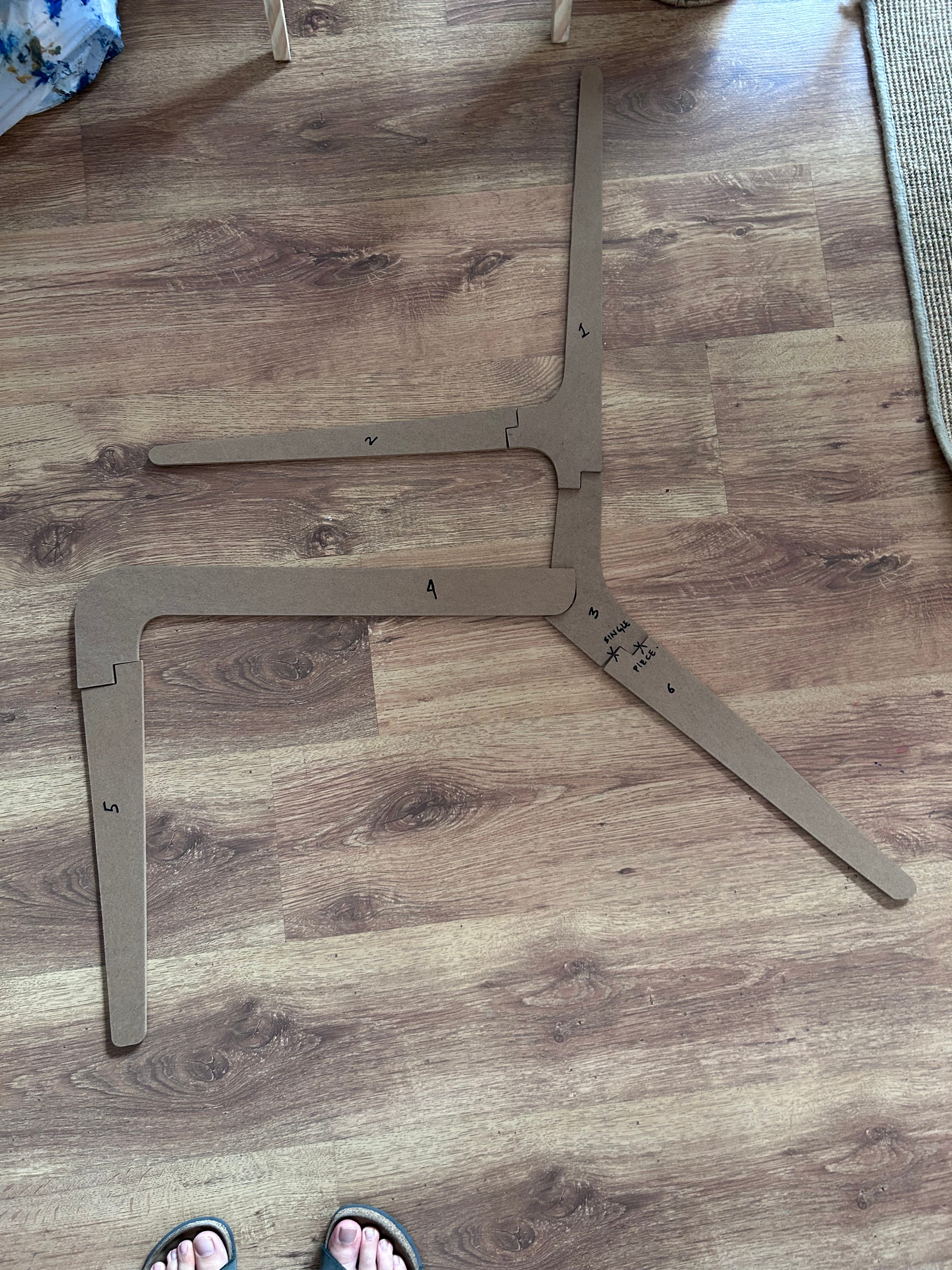
With a few hiccups along the way… ( Shown below -- was the process for the leather pattern we drew, and failed at a few times ). This pattern was also tested for comfort, durability and aesthetic.


We’ve now reached a finished design! So now that all of that’s done and you can take a look at the final thing. ( Notice how the grain moves across the legs ? )


If you want to see more of my work :
Comment your thoughts on the design, or any questions you might have down below. :)
PS : One thing I forgot about — the brass struts that join the armrest to the frame of the chair.
0 comments